Skip to content

What is Legacy Application Modernization?
The legacy applications modernization involve updating software, aligning with business needs and technological standards. This kind of process enhances security, performance and scalability. Ensuring that applications always remain relevant and highly efficient in any fast-paced digital system.
Limitations and Challenges with Legacy Application Modernisation Services
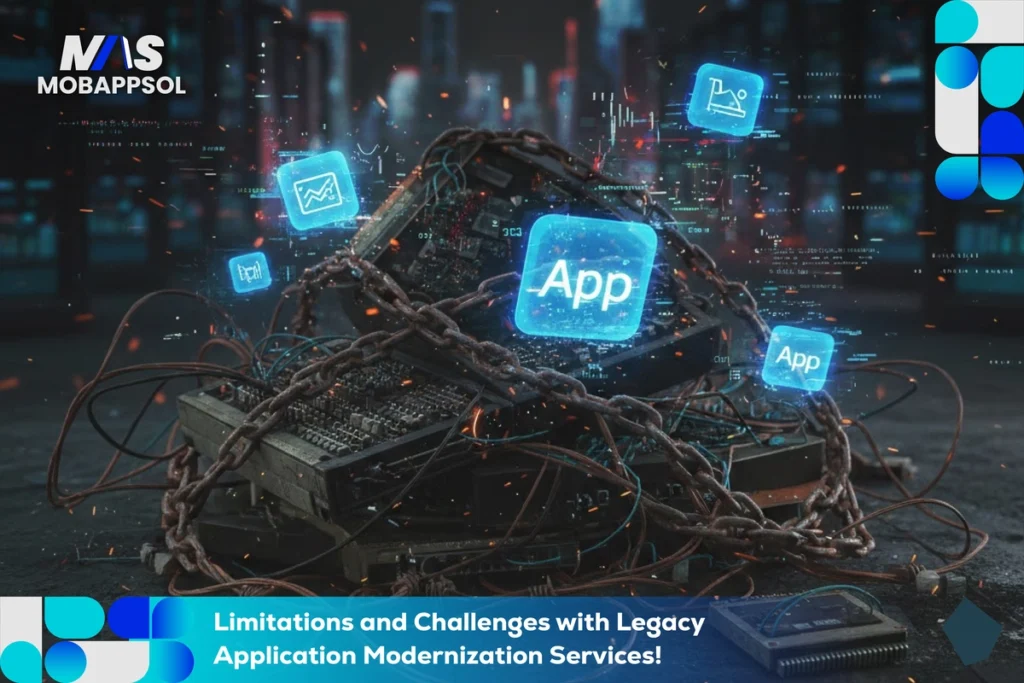
There are various limitations of the legacy Application modernization services that you need to look for. There could be limited work, and deliberately in favor of all the situations that need to be worked out. They are shown below:
The Data Migration And Integration
This helps in migrating data from legacy systems to modern platforms, which can be complex sometimes. This can also lead to data loss or any inconsistencies.
The Technical Debt And Code
Various outdated codebases can accumulate technical data, making maintenance costly and hindering innovations.
The Integration Of New Systems
The legacy application can lack compatibility with modern technologies, posing integration challenges.
The User Adoption
Various employees can accustom the old systems, which may result into transitioning to modern applications, which can negatively impact production.
The Security Compliance
The outdated system might not meet the current security standards, resulting in exposing vulnerabilities.
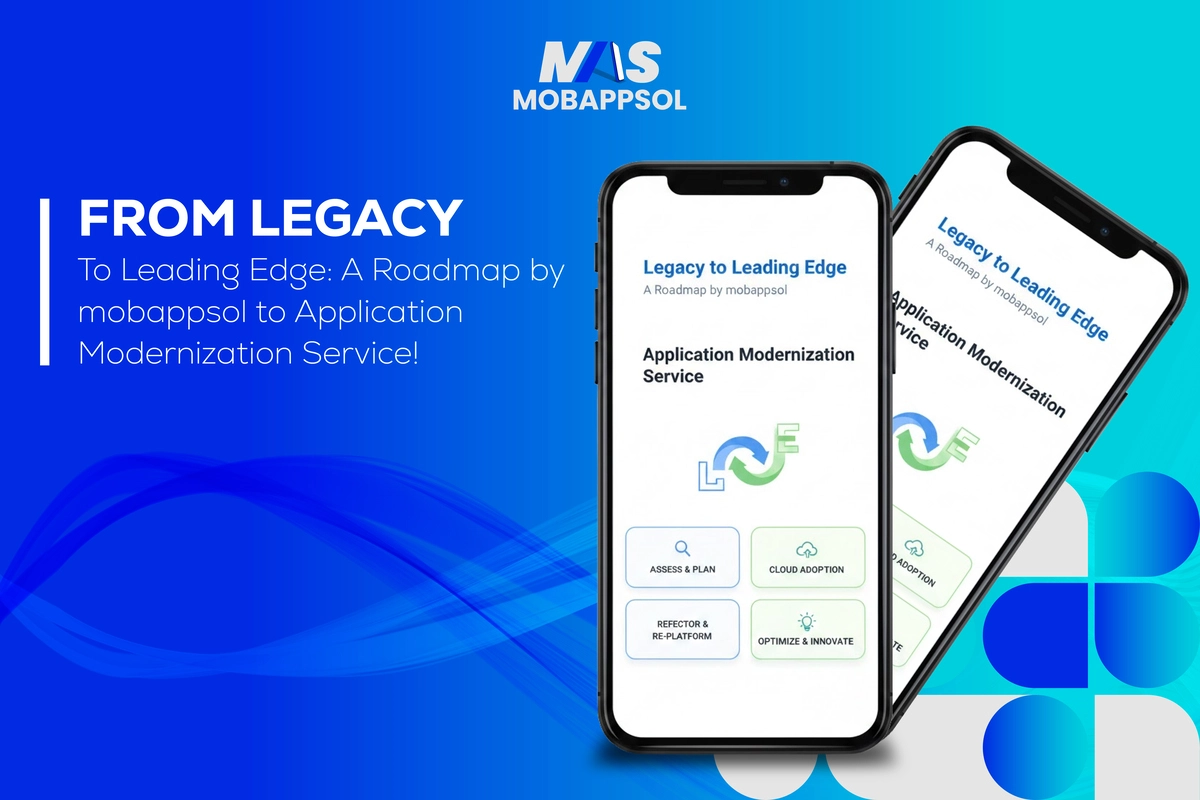
Creating An Application Modernization Service Roadmap By Mobappsol
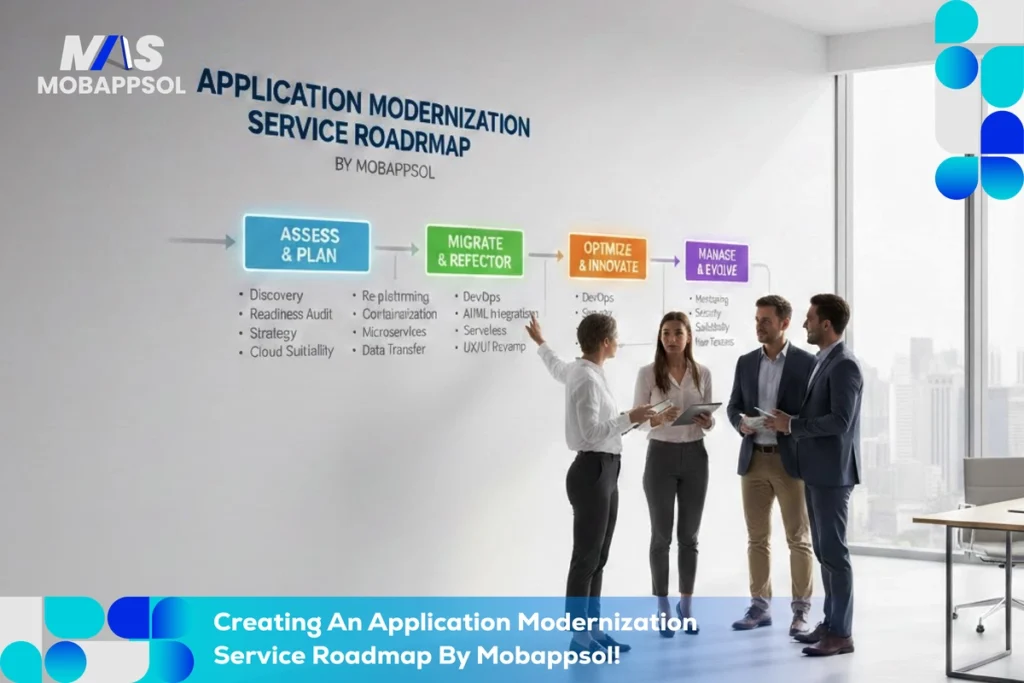
The modern legacy application modernization services can be challenging but also achievable with careful planning and execution. There are important things to remember when you are developing an application modernization roadmap by Mobappsol.
1. Create a plan
The technology is a means of investment for any organization and one has to ensure that the investment aligns with long-term goals. Because as the businesses make mistakes adopting a certain method in the technical solutionsit’s because of the competitors and who wants to finish last. As you can see, racing isn’t improvement, but establishing a cohesive product strategy is where modernization applications push business on the path.
2. Identify What It Actually Brings To The Table
The very first step in the application modernization roadmap isn’t evaluating the legacy applications. But more like including the understanding and dependencies. You can review the existing applications, UX, and code, and ensure the essential functions for preventing new adventures.
3. Identify The Areas Of Improvement
The purpose of application modernization is to make things easier for the team members and how they want to do their jobs as they want. This shouldn’t be conducted merely for the sake of change, but instead, how company leaders should work upon zero possibilities and upgrade the applications, leading to much greater security and improved analytics for a better experience.
Types Of Application Modernization Solutions
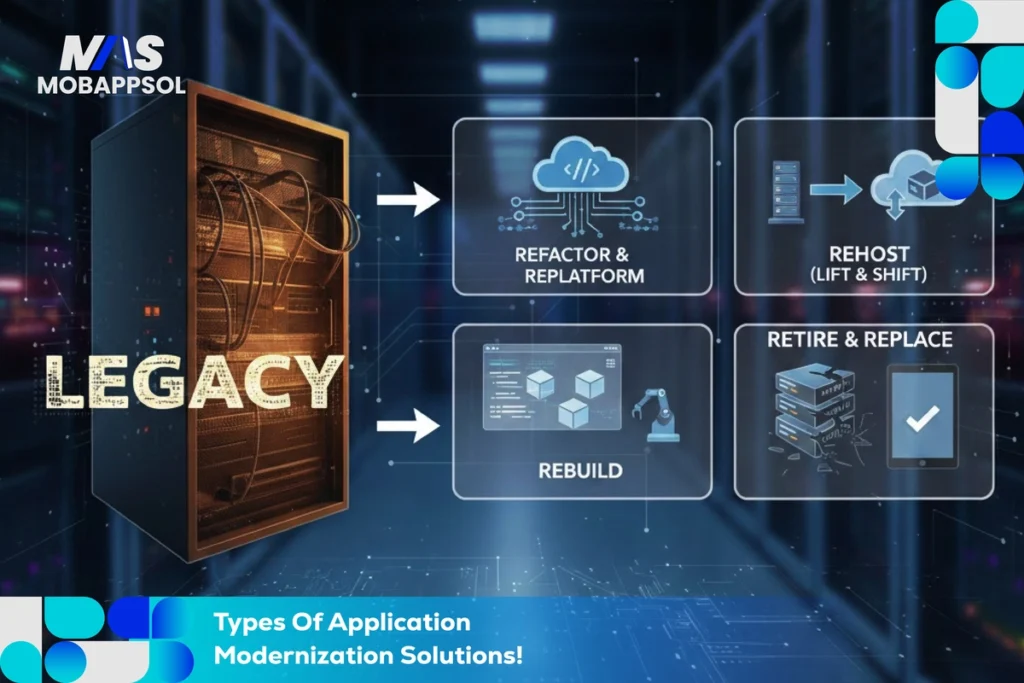
The legacy application modernization solutions by Mobappsol can encompass a range of technologies, each with different characteristics that can necessitate tailored modernizations approaches. Some of the common categories are:
Mainframe Systems
Various financial institutions, along with government agencies and organization along, with high processing demands, can frequently use such large-scale systems. The modernization can also involve strategies like rehosting, refactoring or leveraging modern infrastructure, preserving functionalities.
Client-Server Applications
The architectures can distribute processing between client devices, servers, etc. the modernizing client server applications can involve migrating and web based cloud native architectures for accessibility in long term.
Monolithic Applications
The monolith applications are characterized by a tightly coupled architecture. This scan can be challenging to modify and scale. The modernization even involves the decomposition into small and independent modules for much increased maintainability. These modules can become a micro service
The AI-Powered Intelligence
The AI content assistant for various conversational searches and automatic documentations can summarize, and analyze across the entire repository.
Enhanced Collaboration
It supports your distributed workforce with enough cloud native capabilities that can offer real-time collaboration tools with mobile access to maintain enterprise security.
The Advanced Integration Ecosystem
This connects effortlessly with various business systems, including an updated SAP environment, Salesforce and various emerging cloud applications. This can also be useful in various advanced integrations.
The Future-Ready Architecture
This is built for scalability and continuous innovations. With various modern platforms ensuring the content management capabilities and being involved with business needs. Working with different situations can be beneficial to them.
Final Thoughts
The application modernization is not just a technical upgrade but more like a business survival strategy. The organization can modernize the application and gain the agility for innovating faster, resilience to adoption and the market shifts. This kind of efficiency can have long-term costs. Also, relying on such an outdated system can help them face security risks and integration challenges. To help them with missed opportunities in a digital economy.